Florida No-Fault Insurance & PIP Coverage, Explained · Verde Law
May 5, 2026·8 min read
Florida No-Fault Insurance: What PIP Actually Covers (and What It Doesn't)
No-fault does not mean no one is at fault, and it does not mean you cannot sue. Here is the system, decoded.
"Florida is a no-fault state" may be the most misunderstood sentence in Florida law. People hear it and conclude that fault does not matter, that nobody can be sued, and that the careless driver who rearranged their life will never answer for it. Every one of those conclusions is wrong. No-fault describes how the first medical bills get paid, nothing more. Fault still gets decided, lawsuits still happen, and the at-fault driver's insurer still writes the big checks in serious cases. This article decodes the system: what no-fault actually means, what PIP covers and excludes, the injury threshold that unlocks a real claim, why your car's damage runs on completely different rules, and the coverage gap Florida law quietly leaves in almost every policy.
What "no-fault" actually means
In a no-fault system, your own insurance pays your initial medical bills after a crash regardless of who caused it. That is the entire concept. Florida implements it through Personal Injury Protection, PIP, which every owner of a registered vehicle must carry at $10,000. The design goal is speed: injured people get treated now, while the argument about blame runs on its own track. What the phrase does not mean: it does not mean fault is never determined, it does not mean the careless driver is protected, and it absolutely does not mean you cannot pursue the person who hurt you. It means the first $10,000 of the medical story runs through your own policy.
What PIP covers, in one place
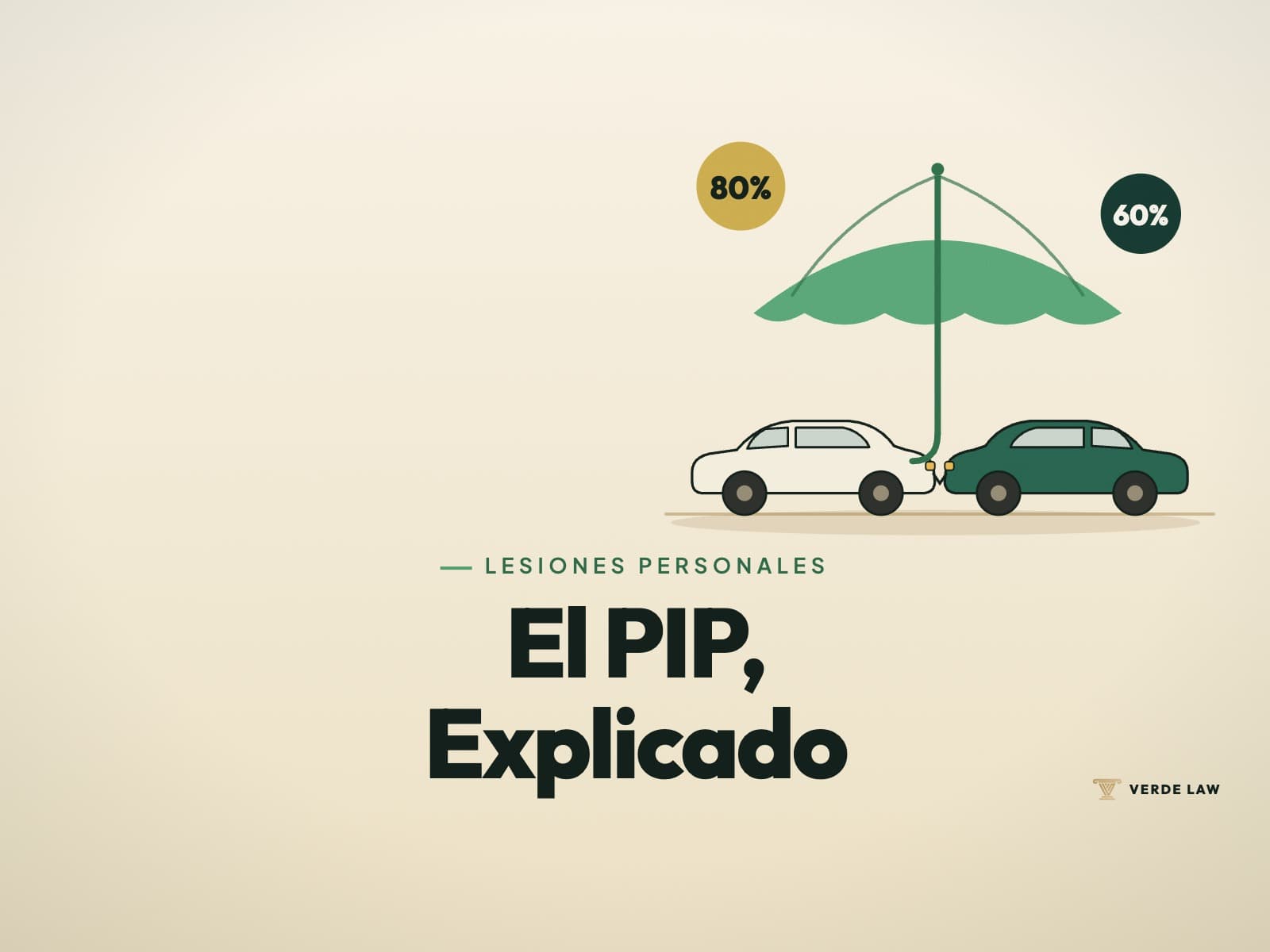
PIP pays 80% of reasonable and necessary crash-related medical expenses and 60% of lost income, up to the $10,000 limit, plus a $5,000 death benefit. It covers you as a driver, a passenger, and, in a feature most Floridians never learn, as a pedestrian or bicyclist struck by a car. It generally extends to resident relatives in your household, which is how children and non-owner family members get covered. Two conditions gate the money: initial treatment within 14 days of the crash, and, unless a qualified medical professional documents an emergency medical condition, a benefits cap of $2,500 instead of the full $10,000. Both traps have teeth, both are avoidable, and our deep guide on [Florida's 14-Day Rule] walks through them line by line.
What PIP does not cover
The exclusion list explains most of the disappointment people feel with the system. PIP pays nothing for pain and suffering, nothing for your vehicle, and nothing for massage therapy or acupuncture, which the statute excludes by name. It does not cover motorcyclists at all, a rule that reshapes every motorcycle case from day one. It stops at $10,000, a number one emergency room visit with imaging can consume. And it pays percentages, not totals: 80% of medicals and 60% of wages, with the remainder becoming part of your claim against whoever caused the crash. PIP is a floor. Treating it like a ceiling is how injured people quietly absorb losses that belonged to someone else.
Related articles
The injury threshold: the door out of no-fault
Here is the pivot the whole system turns on. To recover pain and suffering damages from the at-fault driver, Florida law requires the injury to cross a threshold: a significant and permanent loss of an important bodily function, a permanent injury within a reasonable degree of medical probability, significant and permanent scarring or disfigurement, or death. Cross the threshold, and the case steps outside no-fault into a full liability claim for everything the crash truly cost: all the medical bills, all the lost income, and the human damages no-fault ignores. Notice what decides threshold questions: medical evidence. Permanence is proven with diagnostics, treating physicians' opinions, and consistent records, which is why the treatment decisions made in week one echo in the settlement figure years later.
Your car runs on completely different rules
Property damage was never part of the no-fault bargain. The at-fault driver's property damage liability coverage, which Florida requires at $10,000 minimum, pays for your vehicle, or you can route repairs through your own collision coverage and let your insurer chase reimbursement. Fault matters fully here from dollar one. Rental coverage, total-loss valuations, and diminished value claims for newer vehicles all live on this track, and none of it waits for the injury claim. Handle the car fast, but never sign anything releasing injury claims just to get the bumper fixed.
The gap Florida built into the system
Now the uncomfortable part. Florida requires PIP and property damage liability, but it does not require most drivers to carry bodily injury liability coverage at all. Read that again: the driver who runs the red light may lawfully carry not one dollar of coverage for the injuries they cause. Combine that with one of the nation's highest uninsured-driver rates, and the most important sentence in this article becomes a sentence about your own policy: uninsured and underinsured motorist coverage, UM, is how Floridians protect their own families from other people's empty policies. It steps in when the at-fault driver has nothing or too little, and it is routinely the difference between a recovery and a write-off. Our [Uninsured & Underinsured Motorist Claims] page explains how it works; your declarations page will tell you tonight whether you have it.
How the layers stack in a real case
Put the system together and a serious Florida injury claim runs in layers: PIP pays first, fast, up to its limit. Health insurance follows for continuing treatment, usually with reimbursement rights out of any settlement. The liability claim against the at-fault driver pursues everything else, gated by the injury threshold for the human damages. And UM coverage backstops the whole structure when the at-fault driver's policy is missing or thin. Sequencing these layers, so bills get paid, credit stays intact, and no insurer quietly shifts its share onto you, is unglamorous work that changes outcomes, and it is exactly the work that starts at a free consultation.
A worked example through the layers
Follow one claim through the machine. A driver is rear-ended at a light; the ER visit, imaging, and three months of treatment total $40,000, and an MRI documents a herniated disc her physician relates to the crash as permanent. PIP pays 80% of the first bills until the $10,000 exhausts, which happens fast. Health insurance carries continuing treatment, noting its reimbursement rights. The permanence finding carries the case across the injury threshold, so the liability claim against the at-fault driver now pursues everything: the unpaid 20%, the amounts beyond PIP, lost wages beyond the 60%, and pain and suffering. Then the coverage question decides the ending: if the at-fault driver carries bodily injury limits, the demand goes there; if he carries nothing, which Florida law permits, her own UM coverage becomes the case. Same crash, same disc, two radically different recoveries, separated only by coverage decisions made years earlier. The takeaway costs one phone call: ask your own agent today what your UM limits are and what raising them costs, because the premium difference is usually dinner money, and the coverage difference is the whole case.
Where the money in serious cases actually comes from
Because PIP caps at $10,000, serious cases are funded elsewhere, and finding every source is the lawyer's first real job. The at-fault driver's bodily injury coverage, when it exists. Your own UM coverage, where Florida's rules about stacked and non-stacked coverage can multiply protection across vehicles on a policy, a distinction worth checking on your own declarations page tonight. Umbrella policies sitting quietly above auto limits. And additional responsible parties: Florida's dangerous instrumentality doctrine holds vehicle owners responsible for entrusting their car to a negligent driver, which matters enormously when the driver was borrowing a better-insured owner's vehicle, and employers can answer for employees driving within their jobs. A thorough coverage investigation routinely finds money the family was told did not exist.
The rules of the road that still apply
No-fault changes payment plumbing, not litigation fundamentals. Florida's modified comparative negligence rule still applies: your recovery drops by your percentage of fault, and at more than 50% it disappears entirely. The two-year deadline to file suit for most crash cases still applies. And evidence still decays at the same speed everywhere: camera footage overwrites, witnesses scatter, vehicles get repaired. The system's name changes none of that.
Rapid-fire: four myths, four corrections
"No-fault means I can't sue." False; the injury threshold is the door, and serious injuries walk through it. "The other driver got the ticket, so their insurance pays my medical bills first." False; PIP pays first regardless, and the ticket becomes evidence for the liability claim. "I don't need UM because I'm a careful driver." False; UM protects you from other people's choices, not your own. "My premiums will explode if I use my own PIP." False as a blanket fear; Florida restricts surcharges for crashes that were not substantially your fault. The system rewards people who know its actual rules, and punishes folklore with quiet, compounding discounts, which is the entire reason this article exists and the reason to share it with the drivers you love.
The other driver's insurer already accepted fault. Why is my own insurance involved at all?
Because PIP is how Florida pays initial medical bills by design, regardless of fault. Using your PIP is not an admission of anything, and Florida law restricts insurers from surcharging you for a crash that was not substantially your fault.
I was a passenger. Whose PIP pays my bills?
Usually your own policy if you have one, then a resident relative's household policy, and in some situations the policy covering the vehicle. The priority rules are technical; the practical answer is that coverage almost always exists, and we sort the routing while you focus on treatment.
I ride a motorcycle. Where does this leave me?
Outside PIP entirely, which makes health insurance, medical payments coverage, and especially UM coverage the pillars of a rider's protection. Every rider should price UM before they need it.
Do I need a lawyer if PIP is handling everything?
If your injuries resolved quickly and PIP covered the bills, maybe not. The moment injuries linger, the threshold question appears, benefits get cut or denied, or an adjuster starts calling, the calculus changes, and a free consultation costs exactly nothing to check.
No-fault is a payment system wearing a misleading name. Learn the real rules, fix the UM gap tonight, and call us when the system needs to be worked instead of trusted.
This article is general information, not legal advice, and reading it does not create an attorney-client relationship. Every case depends on its own facts. For answers about your situation, schedule a free, confidential consultation with Verde Law, in English or Spanish, at (305) 786-3003.